





Technology is the axis on which the globe spins. It is necessary for sustainability in terms of speedy communication and information. However, a modern digital age has exceedingly begun to dominate, and in some cases reshape, the roles of teachers and students.
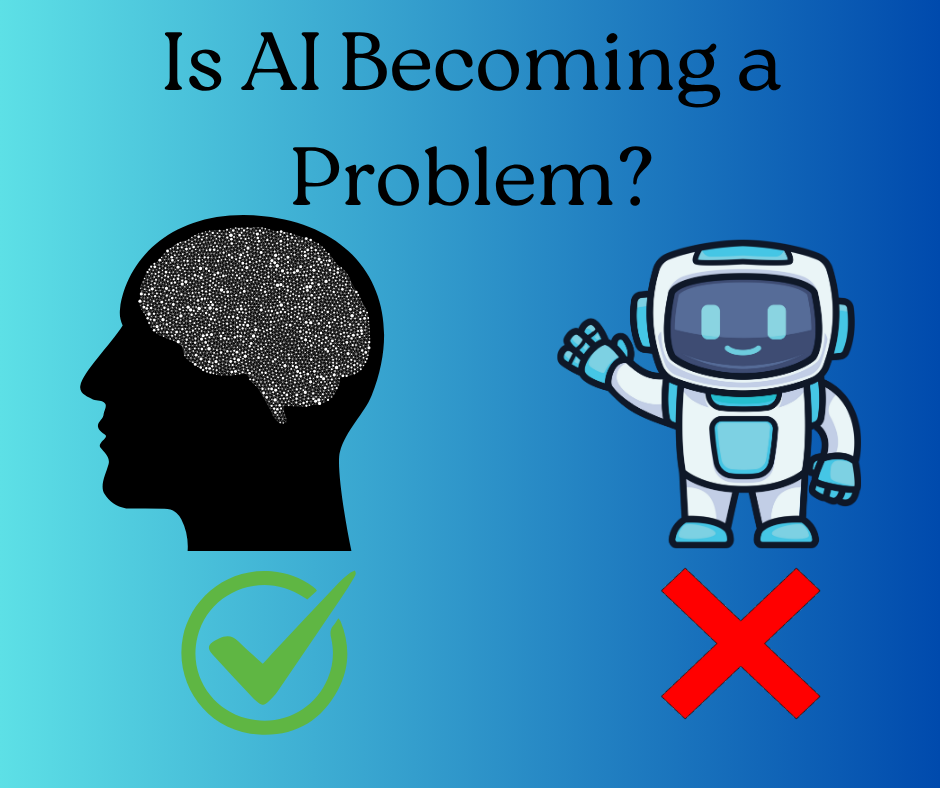
As of recent this phenomenon is being repeatedly circled back to the gradual rise in generative artificial intelligence (AI).
AI is a technological system that applies human intelligence in technical advancements to pre-manufactured designs, but currently it’s been undermined into copying performance tasks typically requiring human reasoning, learning, and decision-making. As a consequence, corners of the internet (e.g. Google and social media apps) have incorporated AI into their platforms, further encouraging the expansion of its influence.
This “AI Boom” originally surfaced in the 2010s to improve computer vision and processing. Programming, calculating, and computing were the defining domains of AI. Now, since gaining public accessibility in 2022 in regards to ChatGPT’s inception, it has drawn heavy criticism, particularly for being unreliable in providing sufficient academic assistance.
“AI’s reliability is a balancing act,” AV Production teacher Galen Rosenberg said. “A lot of opinions centering that question would come from the application of it. The same science could build a nuclear weapon and use it for adverse effects, as could build a nuclear reactor for positive effects. It’s really not the tool itself, it’s how we apply that tool, and what game would benefit or what loss.”
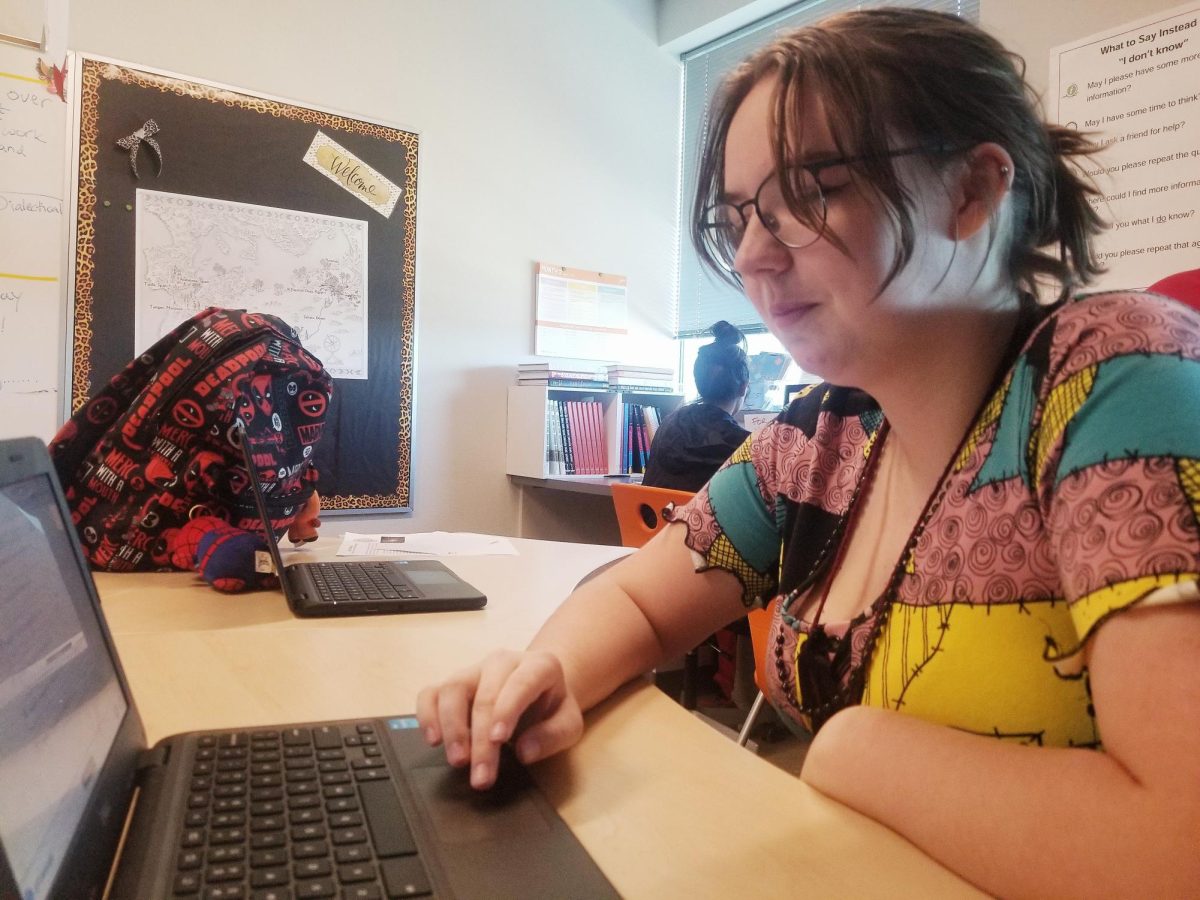
Popularized in 2023, an excessive frankensteining of generated products has deeply affected the learning environment of schools like Johnson. A significant portion of students use it to perform various tasks to cheat out of challenging themselves, such as by fabricating essays or finding the answer choices to a test. Many disregard the high probability that AI might get it wrong (for it’s based on statistical averages and not definite facts).
“They don’t make artistic decisions, it’s all in the numbers and data, and the most probable thing you would look for,” Rosenberg said. “And they’re all best on the data that is used to train them in the first place, which of course you don’t know and may never know, so it’s hard to trust what they spit out.”
Studies report it is especially detrimental to critical thinking skills when one relies so heavily on a robot to spout out answers accepted at face value. There is a gap between cognitive loading effort then and now, proven by student deficiency in several studies. AI is reportedly a poison to brain activity and therefore human capability and understanding.
“AI affects critical thinking,” Pre-AP and AP Language teacher Samantha Moreno said. “Again, reading and writing are all about thinking, and it’s a process. For example, in an analysis class, every word you write matters, and you have to really think about that. AI is not gonna think about the importance of the word, it’s just gonna say a word. It’s not gonna know the connotation.”
Statistics prove students meeting appropriate educational levels is evidently lower than the general usage of AI. One consequence seen is how in 2024, the Nation’s Report Card (NAEP) disclosed 45% of recent American high school graduates failed to demonstrate a basic math comprehension, and 32% failed reading. While this is not directly caused by AI, these effects are related to it, and it is very possible numbers will only increase as AI usage continues to expand.
“They [the administration] encourage us to teach you to use it intelligently, but at the same time it’s like, why should you be relying on it to outline something for you when you should know how to outline because you’ve been learning since the 3rd grade,” Moreno said. “So, it’s kind of problematic.”
Teachers are also perpetrators of this cycle, in more so adapting the enemy to combat the enemy. The English department regularly uses plagiarism checkers to prevent AI written essays from going under the radar. Math classes regularly use physical and digital calculators like Desmos for the nature of softening the complexity of complicated equations, and business courses benefit from it for marketing strategies. Rosenberg expressly requires prompted computed images to assist students’ creative process.
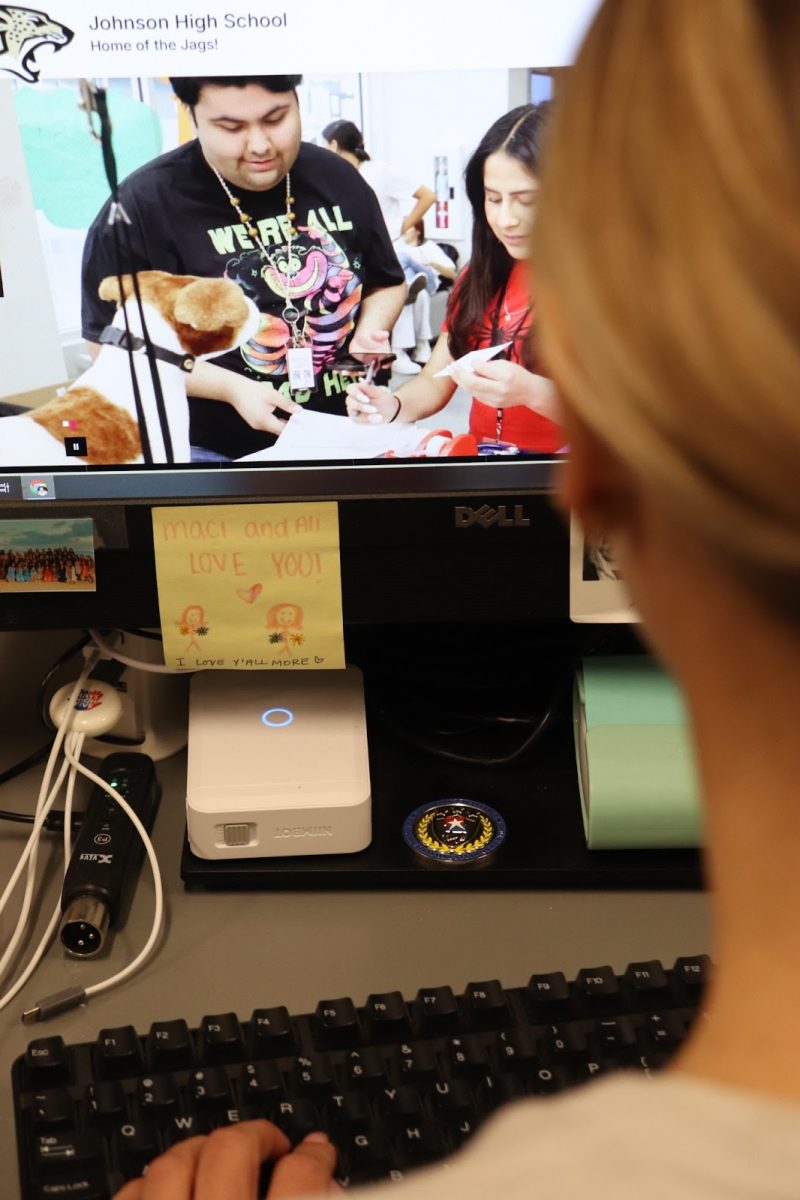
“We [AV Production] use it as a tool to augment our creativity, not replace us,” Rosenberg said. “The big thing is to take small tasks and make the primary product’s process go faster; we are the drivers as we are the designers. Or if you’re stuck with a design, we use one of the things that makes an allogram work to give us some ideas. Because that’s what any type of AI tool does; create what’s statistically the most probable thing that you’re looking for based on the text that you feed it.”
Despite concerns circulating, one side argues AI is not necessarily evil. Both students and teachers alike can wield the tool correctly if they adopt an academically focused rather than academically avoidant approach. It can very well be used as a tutor, or a checker, or a resource in times where one might not have the time to do work manually. Depending on the beholder, and considering the possibility AI may rule classrooms in the near future, this will especially be pertinent to the success of incoming generations.
“I mean, if AI starts taking over how we coach our classrooms, we’re gonna have to adapt to it,” Rosenberg said. “Cat’s out of the bag. The nuclear weapon has been invented, there’s no un-inventing it. There’s only learning how to use it well and training people to understand what’s a good use of it, and what’s a bad use of it.”
However, this same confidence in AI’s redemption as a reliable source is not shared by others, circling back to its debatable position in schools and JHS, on whether it should continue to be implemented per-extreme regulation or checked out of the systems entirely.
“I don’t find AI reliable or trustful, and to be honest you can’t even trust an AI checker, because they’re constantly learning as well,” Moreno said. “It’s like the blind leading the blind, because as students with undeveloped brains use an undeveloped AI, it creates a loop. Students just need to ask themselves about something and not AI. And if they don’t understand it, they should talk to the teacher, because that’s what teachers are for. We’re here to help you guys.”