







Marking JHS history, the library has introduced a new monthly book club dubbed The Black Friday Book Club. Organized by librarian Mary Williams, it was established earlier this school year in the fall semester, and is open to all students and staff members. Their next meeting will be on March 27.
“My goal with the book club is to encourage students to just do some fun reading,” Williams said. “The design of this club is to make [reading] really easy – very low commitment, low stress. It’s a very relaxed way to build up a community around enjoying reading.”
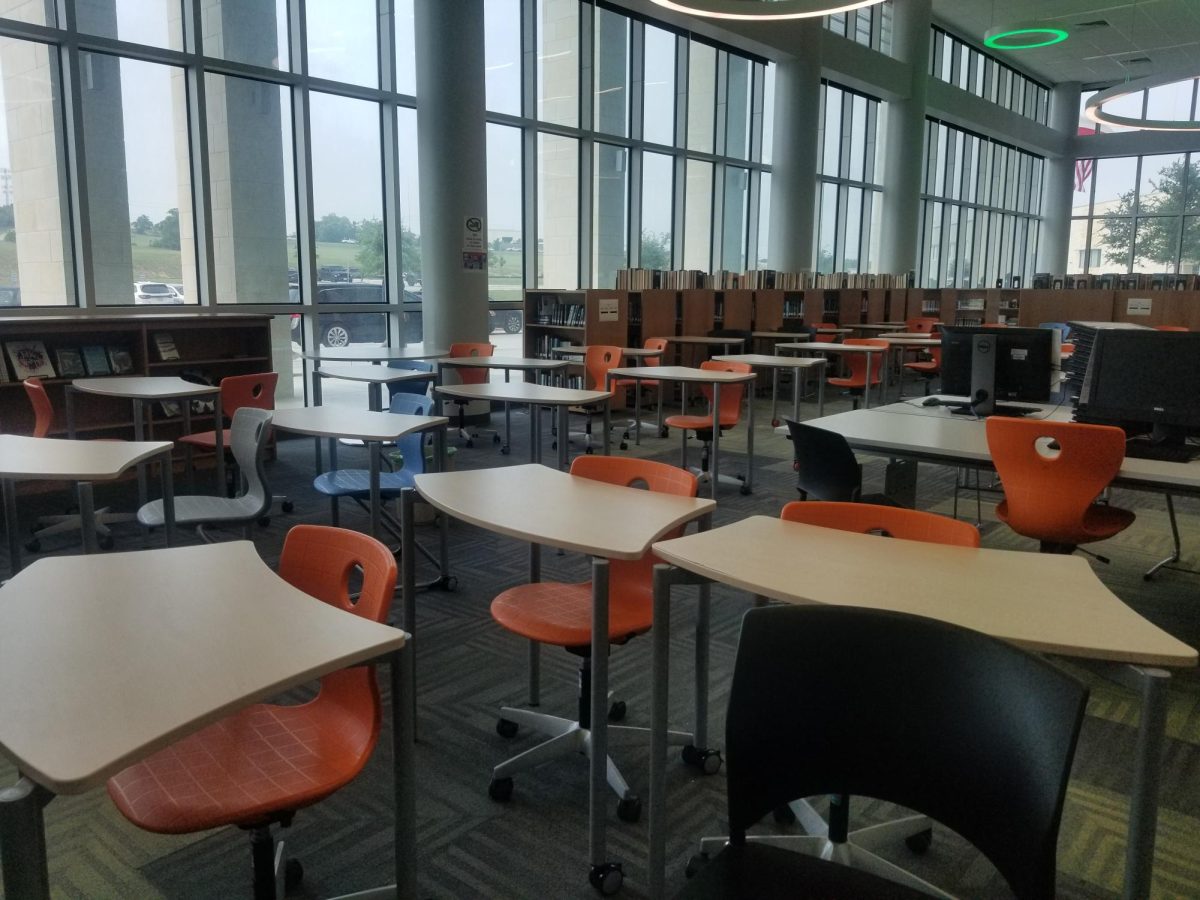
The Black Friday Book Club – per its name – meets every last black (or B-day) Friday of the month for people to congregate in the library during their respective lunch time and have simplistic discussions regarding the assigned reading, play Kahoot games for prizes, and eat snacks graciously provided by Williams.
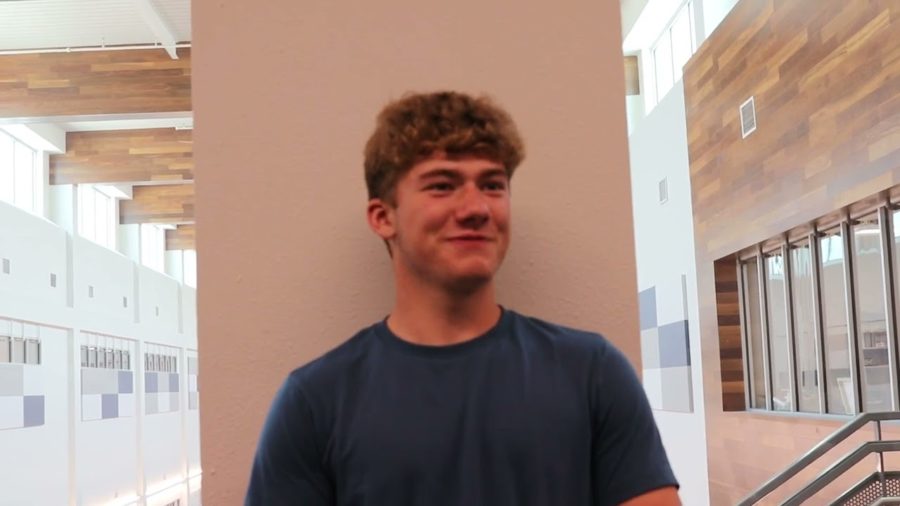
“I really like book club because of the Kahoots she gives us,” junior Milena Caravantes-Rodriguez said. “They make you actually think about the concepts you’re retaining, like internalizing the information, which has really benefited my reading skills in the long run. The club has me reading more, and I have definitely expanded my vocabulary from that, especially for definitions I am already familiarized with.”
The club does not promote critically acclaimed or complex literature, but yields a more accessible route for everyone of all reading levels to easily follow with fun, simple, and short books—contrasting in-class academic reading the librarians are striving to give students a break from.
“So far, we have chosen very light reads that aren’t too long,” Williams said. “We want to keep in mind that this is just something extra, we don’t want it to be stressful or an added burden. Just something that allows us to enjoy reading.”
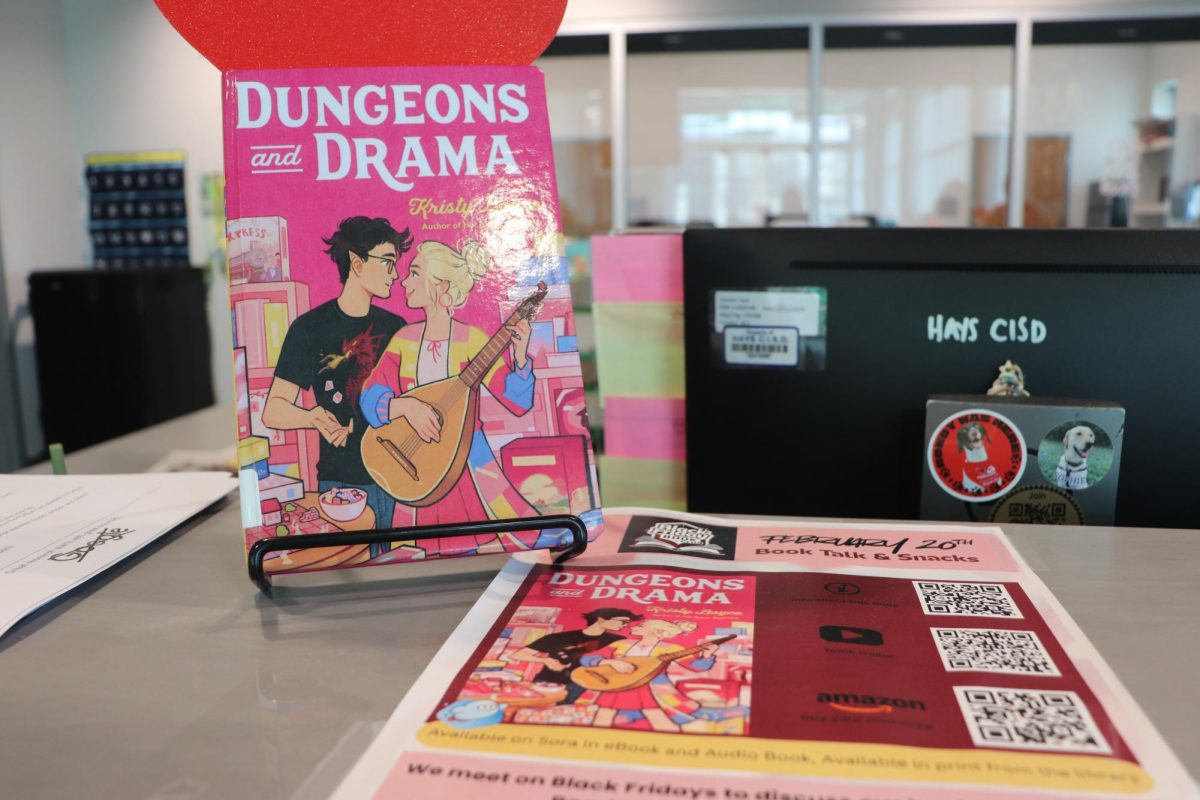
This past February, they read Dungeons and Drama by Kristy Boyce – a light YA romcom about navigating high school drama, centered on the clash between two distinct forces: thespians and gamers, as both oppositions and romantic leads. Currently, they are reading The Inheritance Games by Jennifer Lynn Barnes, a mystery surrounding a girl who is given a suspicious inheritance from a man she doesn’t know, and her journey discovering why she was chosen.
“I like the fact [that the books are] not difficult, and how starter-friendly they are, and how most of them so far have been uplifting,” Rodriguez said. “Reading some of them is so sweet and nice, and I like how it doesn’t feel like an obligation.”
They consistently advertise on the Homeroom slides and have signs posted in the library, equipped with QR codes for people to scan to access a summary or trailer of the current month’s book, and websites where one can buy their own copy due to the limited amount the library has to offer. All books cost around an estimated $8-10 for best affordability.
“The way we don’t promote ourselves as loud as we could could be improved on,” Rodriguez said. “I feel like we should put more posters around the school, gain some real traction, because right now we’re pretty small.”
Seeing the decrease in literacy rates today, a major concern of the book club is edifying reading culture, hoping to serve as a significant influence in moving the school to readopt older, critically beneficial traditions with easy-going, bite-size pieces of books.
“I hope to build some interest where people kind of know even if you don’t love reading that much, if you work with us you’ll read at least six books a year, and introduce yourself to something you may have not chosen on your own, yet ended up really liking,” Williams said. “That’s one of the really fun things about a book club – in that way, they are unique opportunities to explore something one wouldn’t normally read, expose yourself to some different genres, and find out you really enjoyed something you didn’t really dive into before.”
As a forum, book clubs transform the philosophy around socialization, community, and appreciation of literature, packaged as a public group setting that encourages all of the above and breaks down any intimidation factors today’s isolationist and literacy indifferent society has conditioned people into shrugging off any kind of engagement in at all.
“Reading gets a bad rep, because so many are like ‘I hate to read’, but really what it is you just need to find what genres you like,” volleyball coach Tosha Ridgeway said. “Once you discover that, reading is enjoyable. And for whatever reason people like to say you’re not cool if you read, but that couldn’t be further from the truth.”
By and large, reading is essential for day-to-day life, for it sharpens critical thinking skills and knowledge— of which technological mediums cannot in the same sense and is proven to hinder such. In this age of declining literacy, the school library serves as a pocket dimension archiving a special kind of physical media not willing to die out without some effort first, with the librarians as its governing body, and the book club as its additional stability band.
“Cool kids read books,” Ridgeway said. “I mean, that’s how you learn. It takes you places you might never go, it allows you to think about things in whole new ways. Miss Williams is a rockstar, and she’s doing really good things for this school, and I hope more people take her up on that.”